


The One Big Beautiful Bill Reforms Won’t Make Medicaid More Efficient, But Common Patient Records Will
Sixteen million. That’s how many people the Congressional Budget Office estimates will lose healthcare coverage by 2034 thanks to the passage of the One Big Beautiful Bill Act (OBBBA).
Nearly half will lose their coverage due to Medicaid “reforms.” Among the most controversial of those reforms is a community engagement requirement: non-exempt Medicaid recipients must work, volunteer, or look for work for at least 20 hours per week.
The administration isn’t wrong to look for ways to reform the healthcare system. But they better be careful about robbing Peter and seeing Paul get a little richer.
How do I know? Because we’ve seen this happen in other markets.
After Georgia’s “Pathways” program added work requirements to Medicaid eligibility, 80 percent of the $40 million program was spent on administration and consulting fees — not healthcare.
When the government changes eligibility requirements, a fair amount of work goes into figuring out ways to help patients “paperwork their way” back to eligibility.
That is exactly the kind of challenge we explored in the first webinar of our Lightning Rounds series, bringing together value-based care innovators and Medicaid experts, Toyin Ajayi of Cityblock Health, Neil Batlivala of Pair Team, and Avik Roy of FREOPP. Tune into the full webinar.
Their perspective was clear: Instead of piling on new requirements, we should be cutting administrative waste. With unified and accessible data (aka common patient records), Medicaid programs –– and really, all of healthcare –– will become efficient.
Here are three steps that I believe will move us in the right direction.
_________________________________________________________________
1. Embrace Data-Sharing Technology
Whether we like them or not, the OBBBA Medicaid reforms are happening. We need to find ways to lessen their administrative burden. Having a common patient record — a single, always-on view of a patient’s health history — can do that.
By making healthcare data usable and available to providers and administrators, we can cut down on hours of information hunting and repetitive tasks that have trapped Medicaid administrators in a paperwork morass. Freely flowing data will help providers, too.
Here’s an example: A patient updates their contact info during an out-of-network urgent care visit. Weeks later, their PCP wants to follow up about a medication. But the updated phone number? Stuck in the urgent care clinic’s system.
If data flowed freely from one system to another, everyone would have the information they need to follow up with the patient. In our current system, the patient is subject to missed calls, missed care, and maybe even a preventable readmission.
And it doesn’t stop there. Without the patient’s contact information, Medicaid administrators will also have to spend time manually tracking down the patient for information to prove eligibility.
This is an everyday reality for providers working with Medicaid patients. We should use these reforms as a motivator to start sharing data, increasing interoperability, and lowering administrative costs.
That’s what we’re doing at Zus. We find patient data and clean and organize it to make it usable. We use this data to create common patient records that all providers can access. In turn, providers can enter patient updates into Zus, so that all relevant providers have access.
This kind of information sharing will not only lead to fewer administrative headaches for professionals tasked with proving Medicaid eligibility, it will also enable more efficient, value-based care.
Providers will be able to seamlessly collaborate on a patient’s care because everyone will be able to access the full patient picture. And more preventative care will mean fewer costly adverse events.
2. Make it Easier for Healthcare AI to Work Across State Lines
AI tools can help fill out paperwork, automate communication, and take over repetitive tasks. When we build AI tools on a foundation of shared data, we can achieve even more efficiency, like cutting down on hours of care prep work.
Caring for populations that benefit from Medicaid requires finding and keeping track of many people. That prep work is often handled by social workers — before any healthcare can begin.
Social workers should be able to focus on driving outcomes rather than being bogged down with administrative tasks. But the multi-state organizations that they work for face challenges in using AI to streamline operations.
There’s a patchwork of regulations throughout the country that make broadly implementing AI tools impossible. What’s needed isn’t less oversight, but stronger, consistent federal standards that replace this patchwork with clear, evidence-based rules. Without standardized guardrails — and the structured data that AI needs to be useful — multi-state organizations can’t leverage the real-time data flows and AI solutions that would increase interoperability.
Consistent AI use and uniform regulations would benefit all patients and providers — not just the ones connected to Medicaid — by helping us lower admin costs and other repetitive tasks, like summarizing patient history.
3. Clarify and Standardize State-Level Healthcare Responsibilities
It’s not just AI regulations where states differ and interoperability suffers. There are also inconsistent healthcare programs and confusion about healthcare responsibilities, which make interoperability harder to achieve. One way this plays out is through block grants.
Block grants are fixed-sum federal grants to state and local governments that give them broad flexibility to design and implement designated programs with little federal oversight.
On paper, block grants give state leaders the flexibility and autonomy to create a custom healthcare program that works for their constituents. For example, a state may use a block grant to reallocate resources to areas that Medicaid doesn’t cover, like virtual primary care or digital health subscriptions.
But state leaders don’t always want this level of power. If the funded program fails or constituents disagree with it, state leaders take the heat. Suddenly, flexibility feels like a trap, and decision-making grinds to a halt.
All these individual programs also mean that multi-state healthcare organizations must navigate inconsistent rules that slow progress.
Standardizing healthcare programs and responsibilities across state lines would create simpler pathways for sharing data and (you guessed it) lead to more efficiency gains.
The Changes We Make Now Can Lead Us to Value-Based Care
The OBBBA’s Medicaid reforms are like pouring water into a leaky bucket. Common patient records are what stops the leak.
If millions of people do lose their healthcare coverage as a result of these reforms, access to better, more affordable care will be even more crucial.
But I don’t want to get ahead of myself. As Toyin said during our webinar, we’re not on an inevitable path.
Much like when the healthcare system switched from paper records to electronic ones, we’re in a new era of bureaucracy. We have the opportunity to move to free-flowing, longitudinal electronic records that will include the full patient history.
By sharing data and standardizing regulations, we can transform our healthcare system into one that delivers more efficient, less costly, value-based care.

Explore the latest content from Zus
Explore articles, case studies, succes stories and insights on modern health care.

Zus Health Achieves HITRUST r2 Certification, Demonstrating Commitment to Cybersecurity and Information Protection

No Second Chances: How Zus Helps Providers Use AI to Get Risk Capture Right the First Time
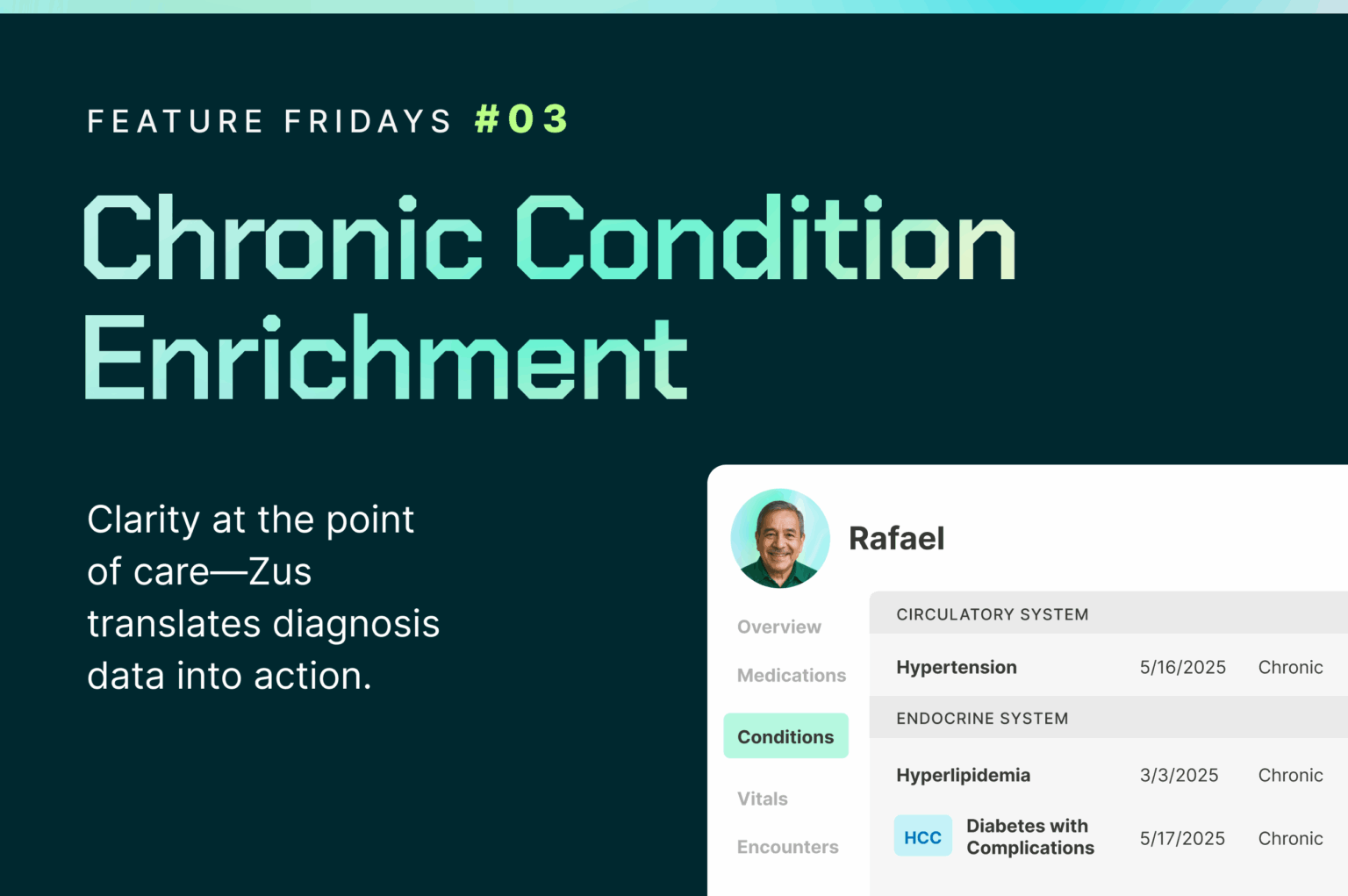
Feature Fridays: Turning Condition Chaos into Clinical Clarity for Improved Care

Reimagining the EHR: From System of Record to System of Orchestration

The End of Retrospective Risk Adjustment: Why Prospective Coding Is the New Standard
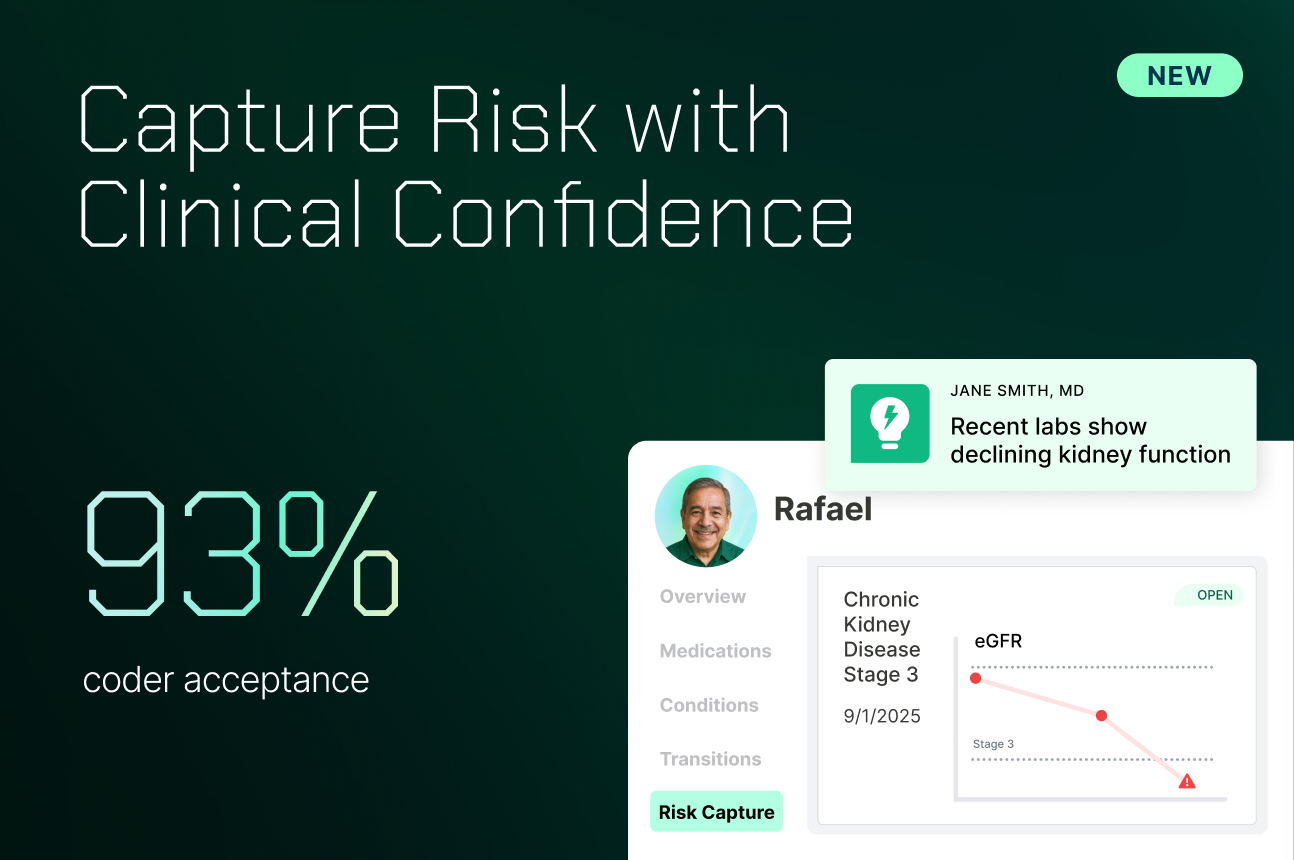
Zus Health Helps Value-Based Care Organizations Capture Accurate Risk with Intuitive, Evidence-Based Workflows
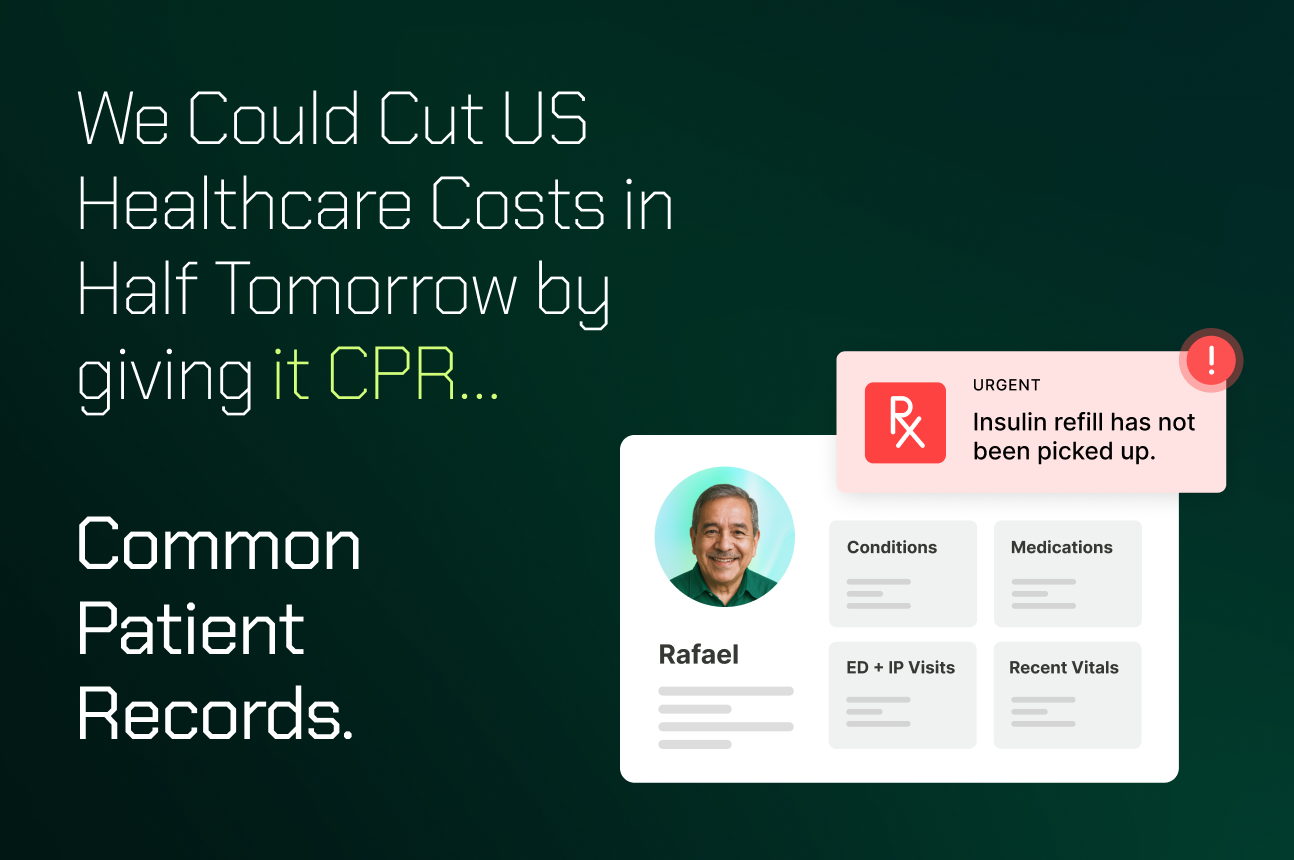
We Could Cut US Healthcare Costs in Half Tomorrow by giving it CPR…Common Patient Records.
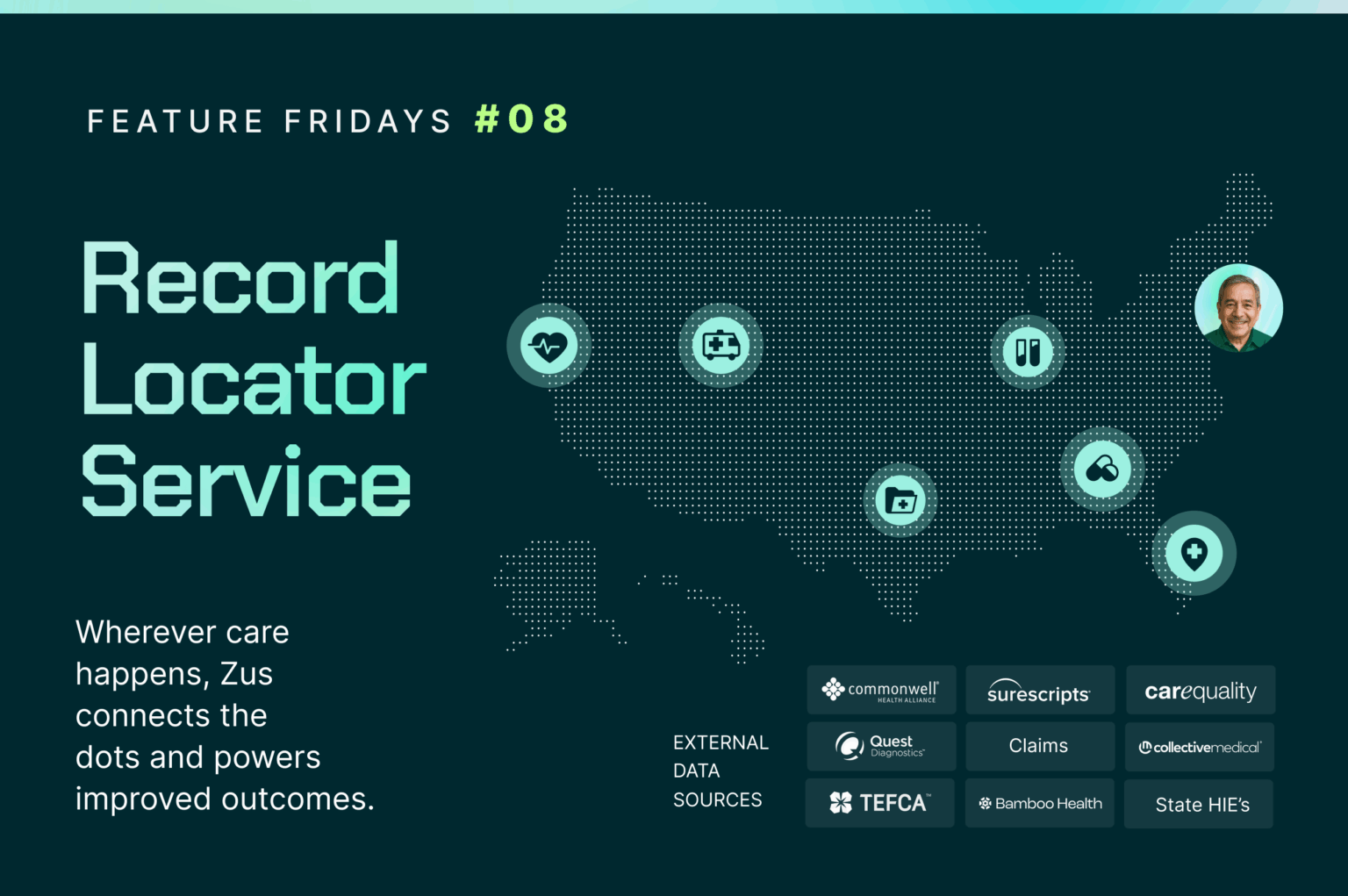
Feature Fridays: Finding the Records Others Miss with Zus’ Record Locator Service
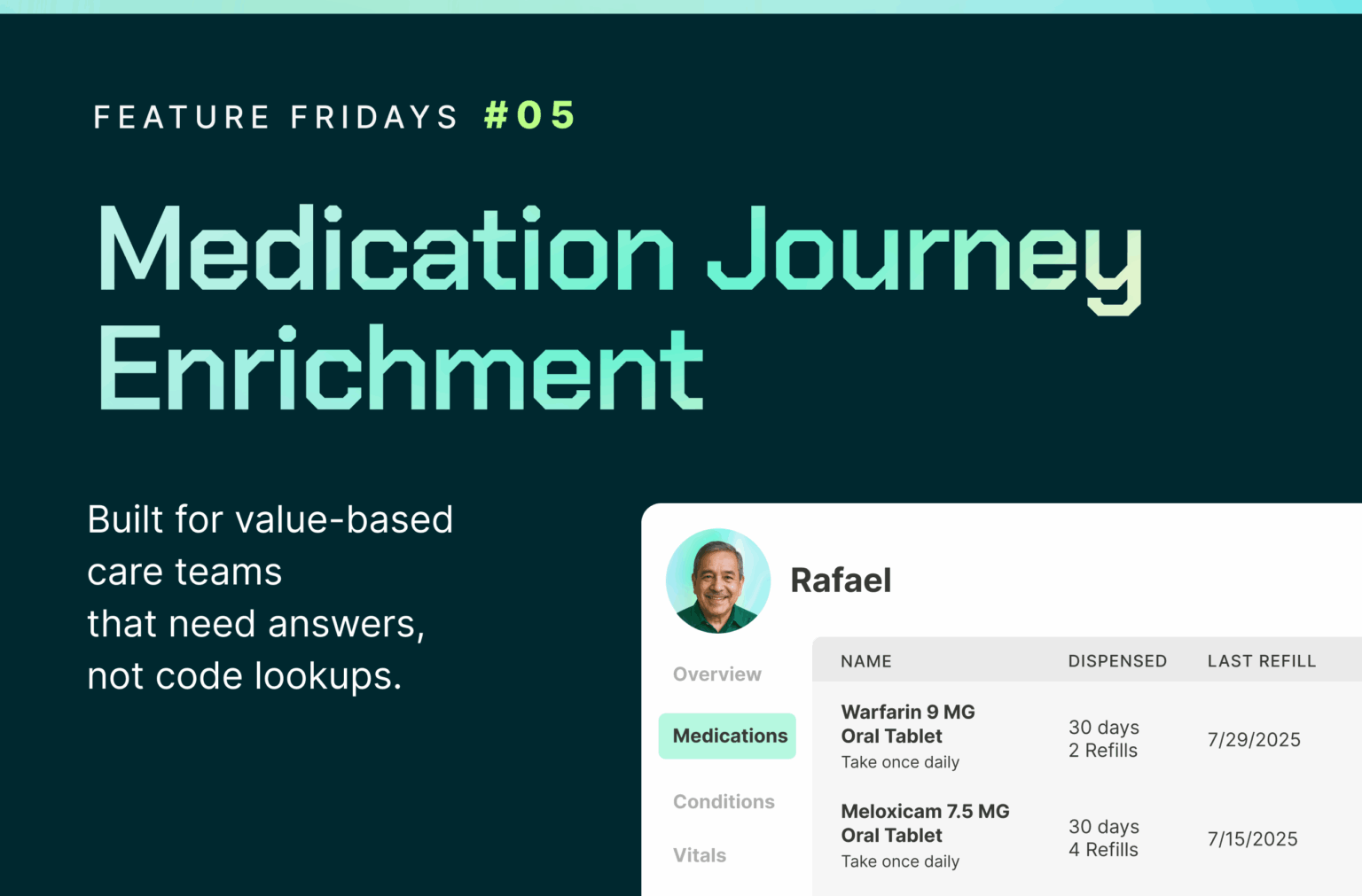
Feature Fridays: Making Medication Management Smarter with Medication Journey Enrichment
Zus Health Recognized as Early Adopter in CMS Interoperability Framework
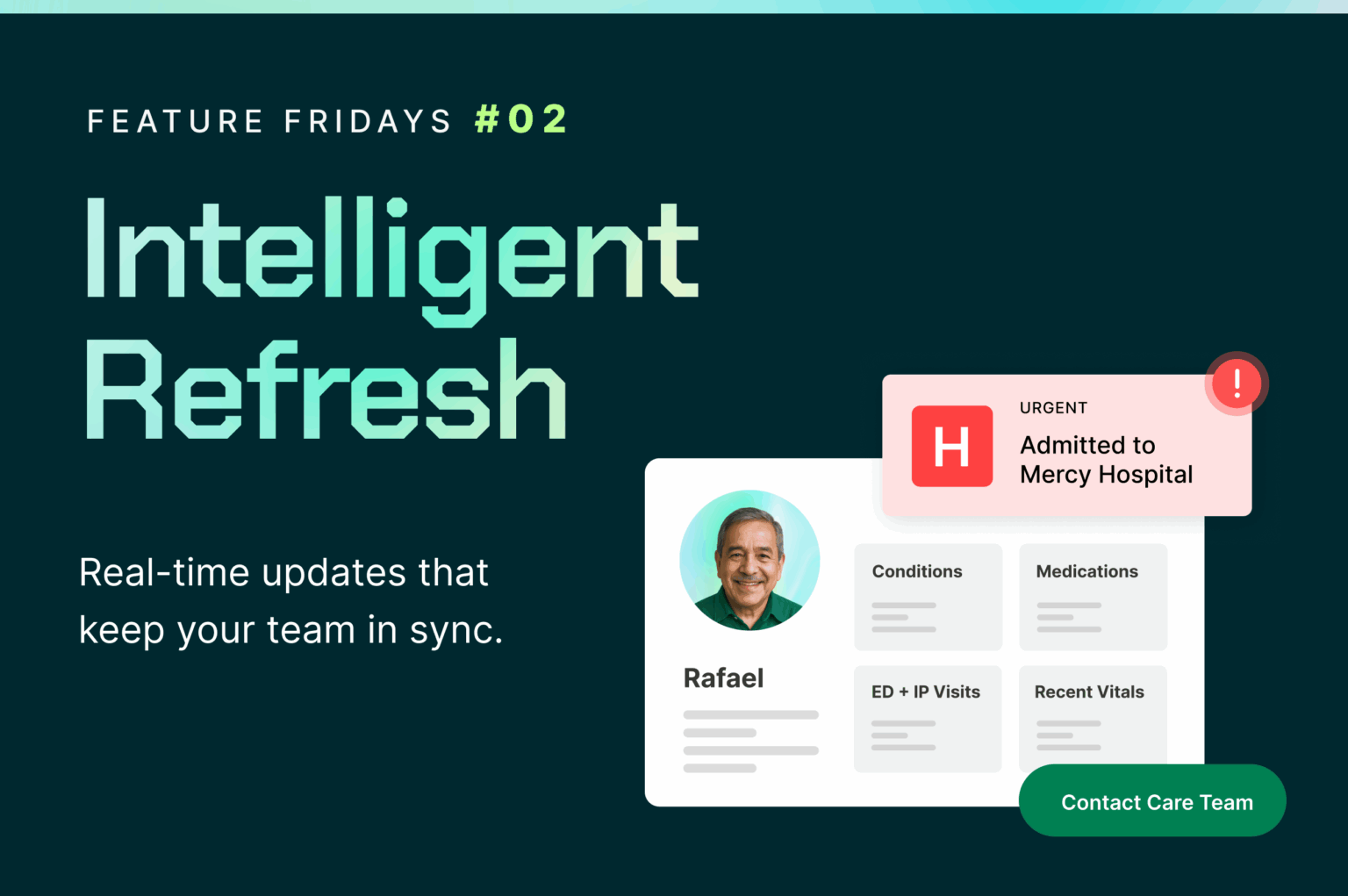
Feature Fridays: Keeping the Patient Record Always On with Intelligent Refresh
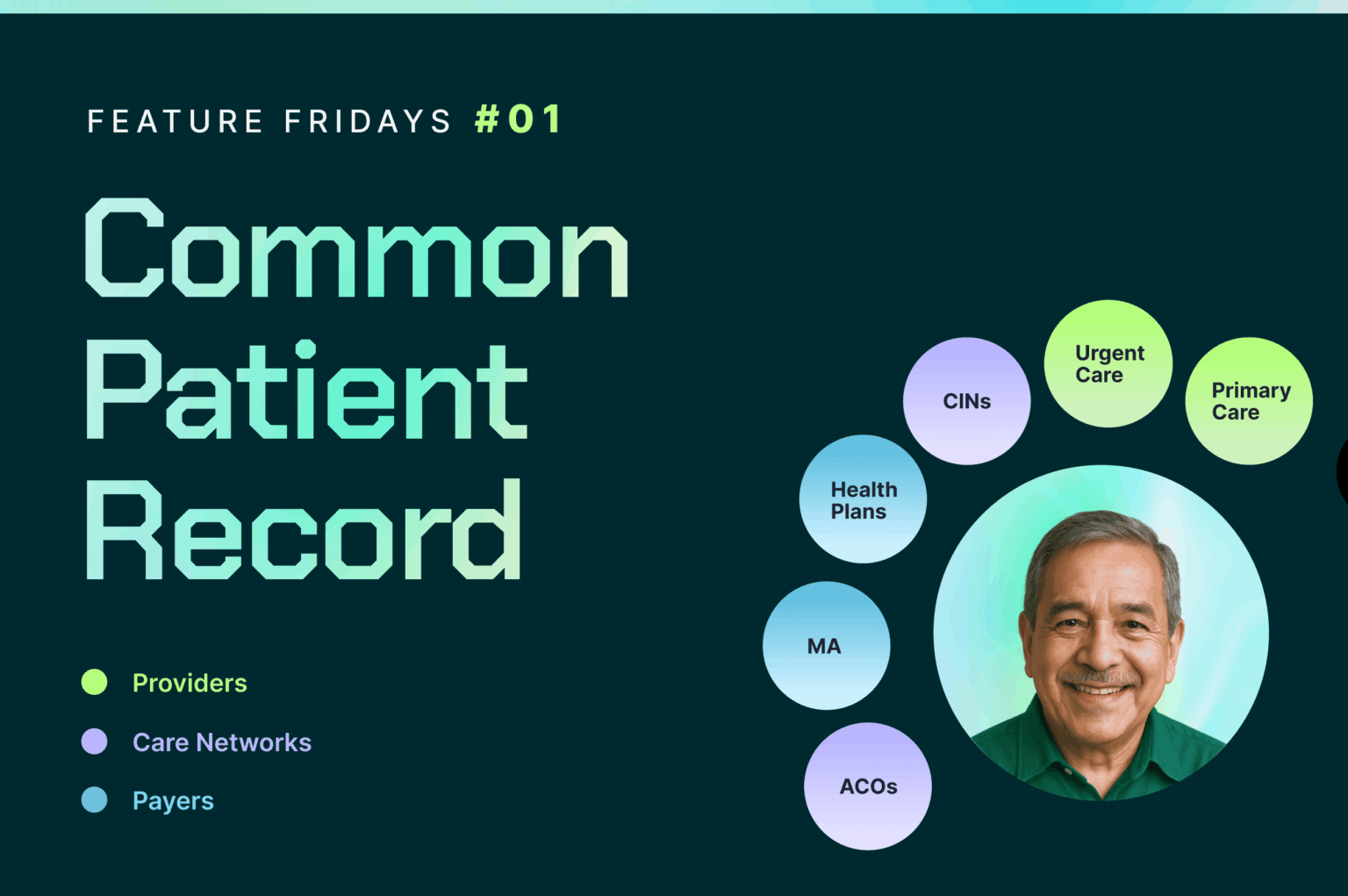
Feature Fridays: There’s a New CPR in Town that’s Changing how Care is Delivered
Feedback Zus shared with CMS: Building Smarter Infrastructure for Data-Driven Care


Pipe Dreams: Converting ADT Noise into Transitions of Care Clarity
Strengthening the Future of Value-Based Care: Reflections on Health Care Value Week

Zus Health Celebrates Unprecedented Growth, Announcing New Clients and AI-Powered Innovations



Bracing for the Presidential Election: Healthcare on the Political Divide










Zus Health Joins athenahealth's Marketplace Program to Bring Real-time Clinical Data to the Point of Care















Zus Health Closes Financing, Signs Partnership with Elation Health, to Accelerate Growth of its Data Service to Provide Connective Tissue for Healthcare









Zus and Healthie Partner to Empower Digital Health Organizations to Access Patient Health History