

Claims to Fame

Why Claims Data is Critical to VBC, and Where It Falls Short
Early in my career, I worked as a management consultant, consulting primarily for large health plans on topics in which I typically had zero prior experience. These projects often involved ingesting vast amounts of claims data and helping the health plan think through strategies to target different sources of medical spend (“you should try to steer these elective surgeries to ASCs”, “you should help manage these high-risk pregnancies to avoid expensive NICU stays”).
These projects taught me a lot about claims data and medical coding – I was immersed in a world of CPTs, DRGs, and HCPCPs, baptized in the alphabet soup of healthcare. As a twenty-something with access to millions of lines of de-identified claims data, I was struck by a few things:
- In a world where data = power, payers have a lot of both. Claims data is arguably the most comprehensive source of data in healthcare. Any healthcare activity that hits the pharmacy or medical benefit, payers know about. This means that payers often know more about a member’s medical history than their doctor does.
- Getting the data is never easy. Every consulting project I ever worked on that involved ingesting claims data from a payer was inevitably delayed at least 3 months, due to the legal and technical hurdles involved.
- On the legal side, we’d have to justify every column of data we requested, explaining why it was crucial to our analysis (“yes, we do need primary diagnosis”). I also think my firm agreed to take on a crazy amount of liability and exile me to Siberia if I ever misplaced the data somehow.
- On the technical side, it often felt like it was the first time our client had ever shared claims data with anyone. We were usually assigned one data analyst who seemed to be pulling the data off the side of their desk, reusing SQL code that had been handed down from generation to generation.
- While claims data is great, it has gaps. Claims data lags 60 to 90 days, so you are usually one quarter behind when analyzing claims, which makes it very difficult to see the impact of your actions on utilization and outcomes in a timely manner.
- Additionally, claims data is only limited to the period of time that an individual was a member at that specific plan, as if their health history started the day they switched insurers.
- Lastly, while claims may have lots of handy data elements like diagnosis codes, procedure codes, and NPIs, it’s also missing other valuable data elements like vitals, lab values, and clinical notes, that help contextualize the data and help you determine whether or not the associated utilization/spend is impactable (“Was this patient always going to have to go to the ER, or could I have prevented this somehow?”). These added data elements are also critical for calculating certain HEDIS measures and identifying important care gaps, like controlling blood pressure and managing A1c levels.
As head of customer success at Zus, I work with many value-based care organizations looking to leverage external patient data to inform patient care and drive better cost and quality outcomes, and see many of my customers dealing with these same challenges.
They’ll sign a contract with a large health plan, but are then frustrated by how challenging it is to get their own customer to share data with them. This puts them in the unenviable position of having to haggle with their customers’ legal and data teams, which is never how you want to kick off a new customer engagement. Because the payer holds all the bargaining power, the VBC provider has no choice but to accept whatever terms for sharing data the payer deems appropriate.*
These challenges are part of the reason why VBC organizations find so much value in the data that Zus aggregates for customers. Not only can Zus fill in many of the gaps in claims data (for example, providing the discharge summary for an ER visit that happened yesterday), but there is also no need to negotiate for access to data. So long as the provider is able to attest that they have an active treatment relationship with the patient in question, Zus can subscribe that patient to data feeds that pull historical and real-time clinical information, giving care teams access to the most up-to-date view of their patient’s health in a format that is actually usable at the point of care.
Claims data is critical for VBC – no other data source is as complete or comprehensive. And ONC is continuing to push for increased access to claims data for employers, patients, and providers, which is great. But claims have never been the whole story and any VBC provider who plans to live and die by claims is missing a vital part of the picture. Just as any responsible doctor would look at the entirety of the available information before providing their differential, so must VBC organizations look at the full picture – both claims and clinical data – before reaching their recommended course of action.
*While this may sound like Information Blocking, the Cures Act is not explicit on whether the information blocking rules apply to health plans and, as such, there is still a fair amount of ambiguity regarding what types of data sharing are legally required.
Featured photo by camilo jimenez on Unsplash

Explore the latest content from Zus
Explore articles, case studies, succes stories and insights on modern health care.
Zus Health Achieves HITRUST r2 Certification, Demonstrating Commitment to Cybersecurity and Information Protection

No Second Chances: How Zus Helps Providers Use AI to Get Risk Capture Right the First Time
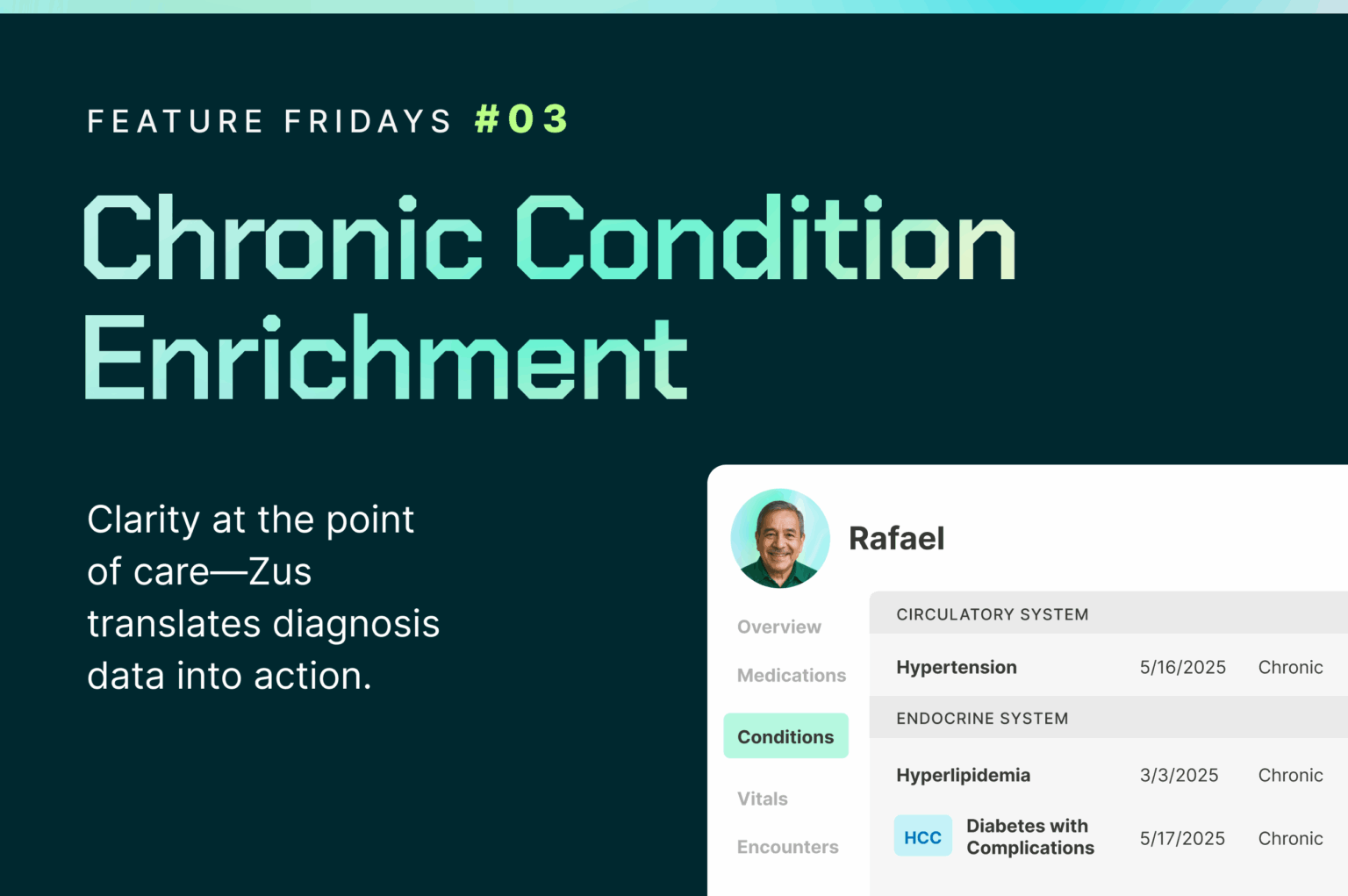
Feature Fridays: Turning Condition Chaos into Clinical Clarity for Improved Care

Reimagining the EHR: From System of Record to System of Orchestration

The End of Retrospective Risk Adjustment: Why Prospective Coding Is the New Standard
Zus Health Helps Value-Based Care Organizations Capture Accurate Risk with Intuitive, Evidence-Based Workflows
The One Big Beautiful Bill Reforms Won’t Make Medicaid More Efficient, But Common Patient Records Will
We Could Cut US Healthcare Costs in Half Tomorrow by giving it CPR…Common Patient Records.
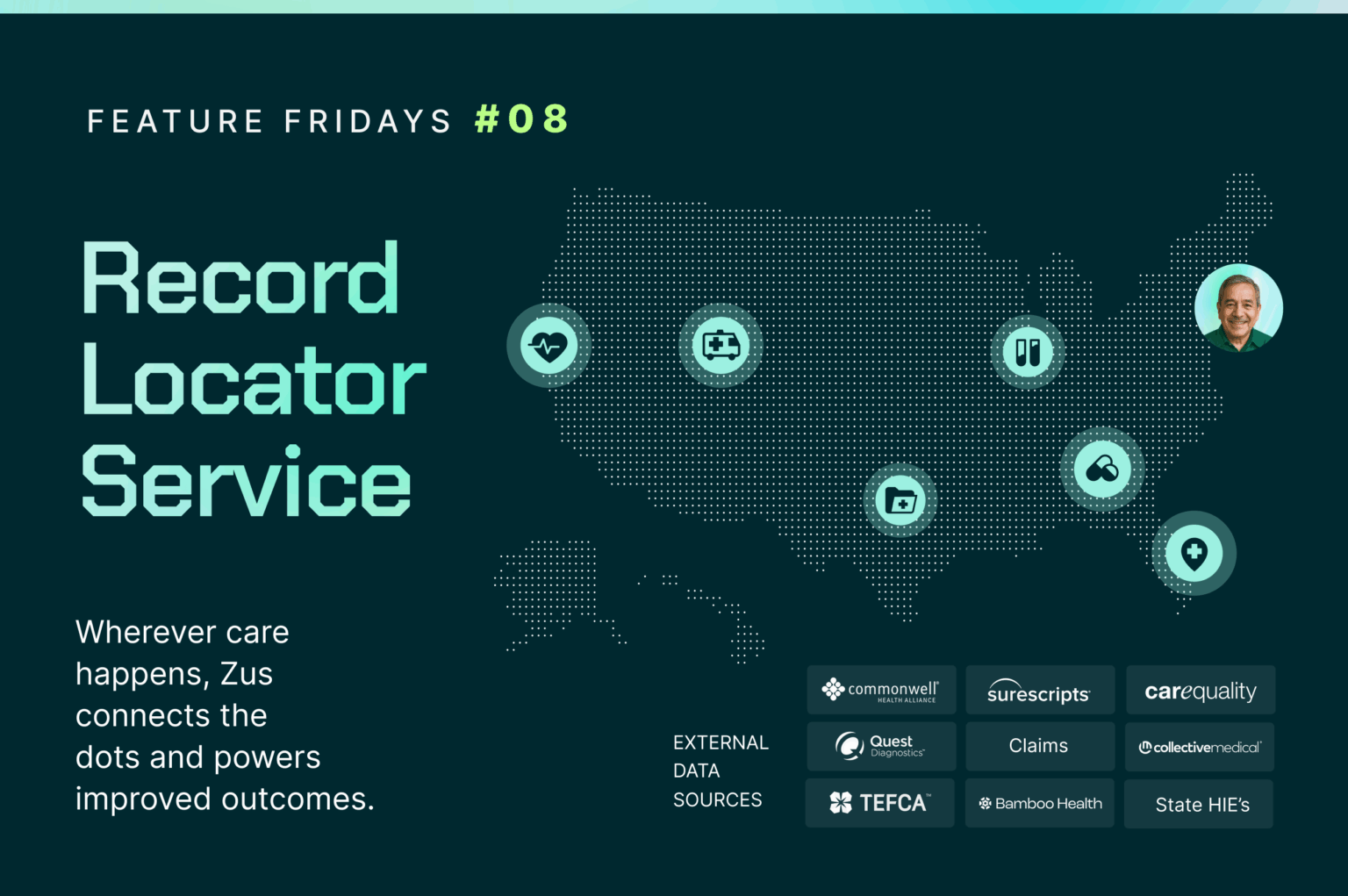
Feature Fridays: Finding the Records Others Miss with Zus’ Record Locator Service
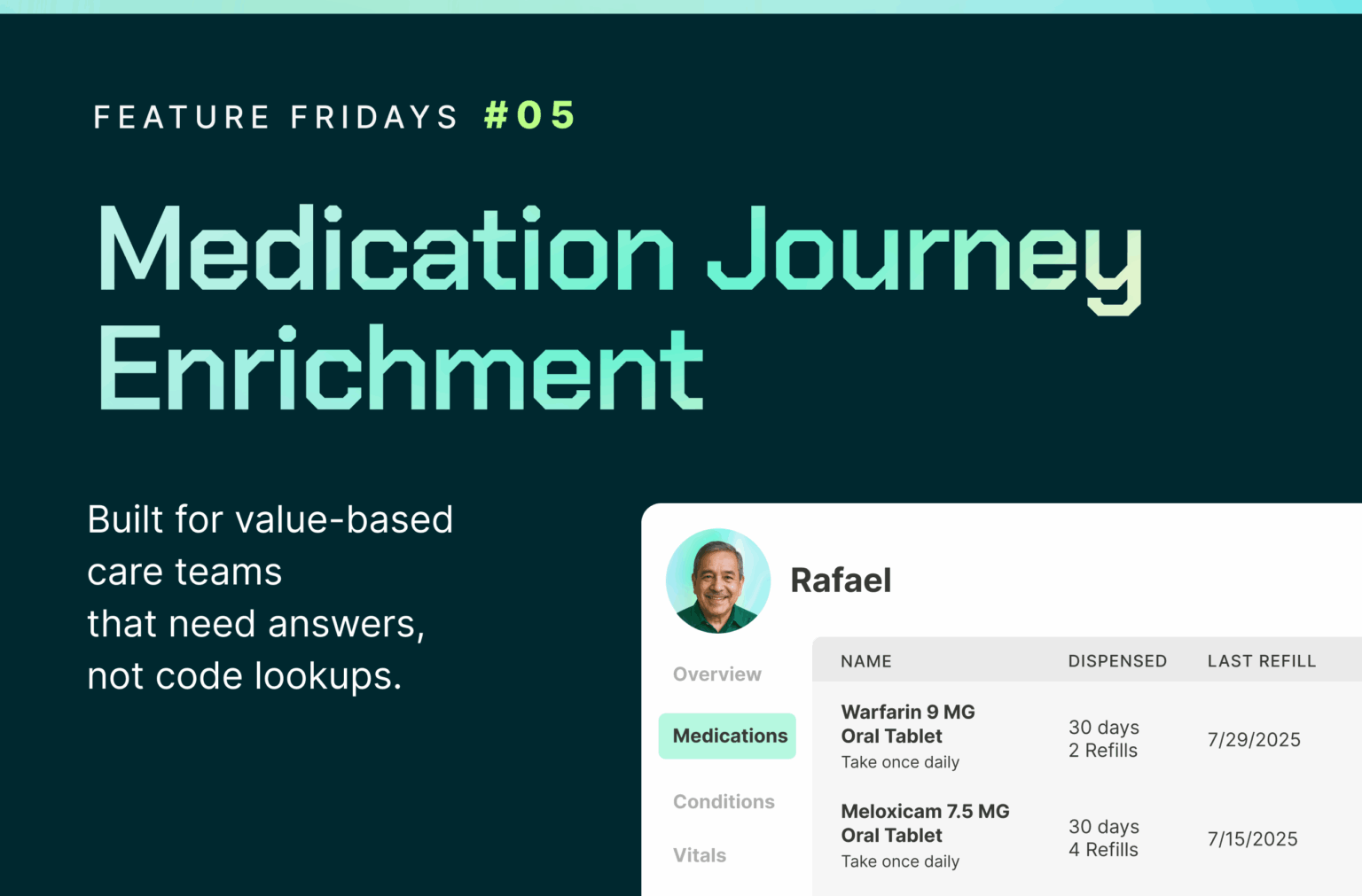
Feature Fridays: Making Medication Management Smarter with Medication Journey Enrichment
Zus Health Recognized as Early Adopter in CMS Interoperability Framework
Feature Fridays: Keeping the Patient Record Always On with Intelligent Refresh
Feature Fridays: There’s a New CPR in Town that’s Changing how Care is Delivered
Feedback Zus shared with CMS: Building Smarter Infrastructure for Data-Driven Care

Pipe Dreams: Converting ADT Noise into Transitions of Care Clarity
Strengthening the Future of Value-Based Care: Reflections on Health Care Value Week

Zus Health Celebrates Unprecedented Growth, Announcing New Clients and AI-Powered Innovations

Bracing for the Presidential Election: Healthcare on the Political Divide








Zus Health Joins athenahealth's Marketplace Program to Bring Real-time Clinical Data to the Point of Care













Zus Health Closes Financing, Signs Partnership with Elation Health, to Accelerate Growth of its Data Service to Provide Connective Tissue for Healthcare







Zus and Healthie Partner to Empower Digital Health Organizations to Access Patient Health History